Tickets für Bleachers - Forever EU/UK 2026 in Berlin Kreuzberg
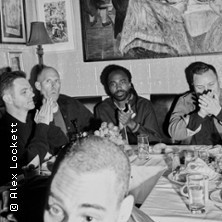
Bleachers - Forever EU/UK 2026
69,91 € *

inkl. MwSt. zzgl. Versandkosten

Sofort versandfertig, Lieferzeit ca. 1-3 Werktage

  • Montag, 9. November 2026
  • 20:00
  • Columbiahalle Berlin Kreuzberg

Dieses Event weiterempfehlen:

Berlin Kreuzberg
10. November 2026
20:00 Uhr

Columbiahalle Berlin Kreuzberg

Bleachers - Forever EU/UK 2026

69,91 €

The third track on Bleachers’ fifth album is called We Should Talk. Ultimately a song about... mehr

"Bleachers - Forever EU/UK 2026"

The third track on Bleachers’ fifth album is called We Should Talk. Ultimately a song about reconnecting with a lost friend, it’s also a track by the band that Jack Antonoff considers “the core” of his creative work that touches on Antonoff’s start in music. “We had a band, we had a life, we had dreams,” he sings, “in a van we wrote our own bible supreme”, a poetic summary of the years when a teenage Antonoff escaped small-town New Jersey with Outline, a quartet who absorbed the influence of the punk underground, self-releasing their EP, cropping up on compilations called things like Bottled Violence and Punk Will Never Die, booking their own shows in anarchist bookstores and community venues with the aid of a directory called Book Your Own Fucking Life. “We called what we were doing emo”, he notes, “but emo to us at the time meant Fugazi and Texas Is The Reason, so a very different context fromt oday”.

They piled into Antonoff’s family minivan, Book Your Own Fucking Life in hand, and set out to tour America, albeit with a very New Jersey chip on their shoulder. “When we started, I was 14, we were playing in fire halls and VFW halls, and 15 miles away The Strokes were playing their first shows at the Mercury Lounge in Manhattan,” he remembers. “We wouldn’t have even fucking considered going to see them, not because we were too poor, not because we couldn’t get out of the house, but because we were like, ‘oh, fuck that New York scene’. We were from another planet. New Jersey, it’s separated from Manhattan by this body of water, like a medieval moat, which people do not cross. There’s this whole sentiment of, ‘oh well, that’s how they do it in the city’, that everything New York is famous for is better in Jersey: bagels, pizza, sleaze, all of it. Which is true.”

Touring with Outline and his subsequent band, the folkier Steel Train, was a hardscrabble life. “We must have played 250 shows a year, for five to ten years straight, in a time when being in a band wasn’t something that, like, your parents would brag about,” he smiles. “And it was magical. It left me with a massive love of being a touring artist. Why does a person have that bizarre bone in their body that makes them want to be onstage in front of all these people sweating and screaming together?” He shrugs. “I do.”

Perhaps that’s one of the reasons Antonoff started Bleachers in the first place. It certainly wasn’t for want of something to do. In 2013, his career as a songwriter and producer was on the verge of going stratospheric, something it duly did. And yet, he says, “I felt so anxious. I felt a lot of fear at the time. I was 26 or 27, a transitional phase, the age where you go from fun person to alcoholic or good hang to person with no job. To this day, I love working with people on songs, but once again, that’s just part of what I do, so when that started to take off, I just remember the wild anxiety of ‘this thing I do, I’m experiencing a lot of success for other corners of it’.”

The solution was to form his own band, in which he was the lead vocalist and chief songwriter, and start playing clubs again. In the years since their 2014 debut album Strange Desire, Bleachers have gradually built from playing The Met in Pawtucket to headlining Madison Square Gardens, from a debut album recorded piecemeal in hotel rooms while Antonoff was touring with Fun to collaborations with everyone from Atlanta hip hop architects Organized Noise to Antonoff’s teenage hero Bruce Springsteen, the latter a progenitor of what he calls “a very New Jersey sound that we all know but that’s underdiscussed, that very few people are putting a name to, and I feel very dead set on carry the torch for”.

And, most importantly, along the way, Bleachers built a rabidly engaged fanbase that Antonoff says are “like a family”. “There’s this air in the room when we play shows that that these are the people that get me, because it’s true, they do,” he nods: no small thing for someone who says he’s “always felt extremely misunderstood”. “I think it’s really against people’s idea of me that that the band’s culture could be that real. You wouldn’t come to a Bleachers show because you liked an album I produced for someone else. It’s such a culture and such a scene. I feel how they’re doing in life and it affects me. You know, we’re together through a lot of things. When you’re on tour, for example, and let’s say there’s been a huge news event, like a mass shooting somewhere, you see everyone feeling it, and you literally talk about it, maybe even change the set list. That’s the most acute version, but it’s deeper than that. You grow with them, and new people come, but it’s like a colony where they’re all sucked up into the culture. You see how they see you, you see the art they make, the jokes they make, you’re not going online to catch the tenor of the times: that’s real people, I see what they’re going through. The biggest thing I’ve taken away is how much people want to be together, how much people want something they can actually believe in that isn’t… making fun of them. I think people are really exhausted with being the butt of the joke.”

One of the reasons Bleachers have attracted the audience they have is that, as Antonoff points out, their songs are “deeply” earnest and hugely personal, in the teeth of what he calls “the world daring us not to give a fuck”: you could, if you wished, see Antonoff’s diaristic lyrics as a kind of call-back to the soul-bearing world of emo from which he initially sprang. “If you cut someone open, what would they sound like?” he says. “I would sound like this. I think that’s often frowned upon, but it just seems so incredibly unfulfilling to do it any other way. I have It’s scarier than ever to be so clear about it, but I feel bolder than ever, because I have nothing to lose at this point. Not that I ever did, but, Jesus Christ, even more so now. As someone who loves and cares about culture, it’s like I have space now for my wife, my family, my band and my audience. I think it’s really important for people to know that if you’re not part of any of those groups, it’s nothing, it’s zero. Ironically, I feel like it’s the people that aren’t part of any of these groups that matter to any of us that are guiding conversations. It’s like it’s 99.999% of sane people are watching 0.0001% of the population screaming and then reacting to it, even though we know it’s not real. The thing that I find fascinating at this point in time is that so many of us are investing in things that we know we don’t care about.”

The songs on Everyone For Ten Minutes are about things Jack Antonoff cares about. Marriage, generational divides, grief, death and our inability to talk about death and what he calls the “monumentally bizarre moment in culture” that we’re currently experiencing: among the bonus tracks lurks On The Roof At ELS, a straightforward paen to the simple pleasure of drinking with friends after a recording session at Electric Lady, the legendary New York studio that’s become Antonoff’s second home and where Everyone For Ten Minutes was recorded. Set to music that leaps from harmony-laden folk rock to shimmering pop-soul to sax-assisted examples of the aforementioned New Jersey sound, they’re variously heartrendingly sad, lividly angry and blackly comic. And despite the moments where it peers into darkness, Antonoff says it’s an essentially optimistic album, which fits his current mood. “Usually I find myself pretty hopeful. Like I really am very, very hopeful, even right now, I have a lot of hope, specifically in art. There’s not a lot else to believe in, you know?”

And then he turns back to the idea of Bleachers’ audience being like an extended family. “Your average idiot would tell you the way to service an audience would be to give them what they want, but the exact opposite is true. The only way to really be cruel to your audience is to be inauthentic, because people feel it and they get sad, because when someone’s inauthentic, essentially what they’re saying is that they think the audience is dumb. What’s so lovely about playing live and making records and being in this long conversation with a group of people – it’s very easy for them to spot any bullshit, because they actually really know you, like there’s a real relationship there. The biggest lifeblood for me is that connection, so if there’s ever a time to deepen it….”

Weiterführende Links zu "Bleachers - Forever EU/UK 2026"

Informationen zum Veranstalter
Hinweis: Die Buchung für die Veranstaltung wird im Laufe des Buchungsvorgangs ausschließlich über die Plattform von Eventim.de erfolgen. Informationen zum Veranstalter gem. Art. 30 DSA finden Sie auf der Seite, auf der Sie die Sitzplätze/Kategorien auswählen können. Wir weisen darauf hin, dass Biberticket lediglich Vermittler zwischen Veranstalter und Ihnen ist. Vertragspartner bei Vertragsschluss nicht Biberticket, sondern der Veranstalter.
Bewertungen lesen, schreiben und diskutieren... mehr
Kundenbewertungen für "Bleachers - Forever EU/UK 2026"
Bewertungen werden nach Überprüfung freigeschaltet.

Die mit einem * markierten Felder sind Pflichtfelder.

Zuletzt angesehen